Understanding the Demands of Industrial Flooring
Heavy-Duty Performance Requirements
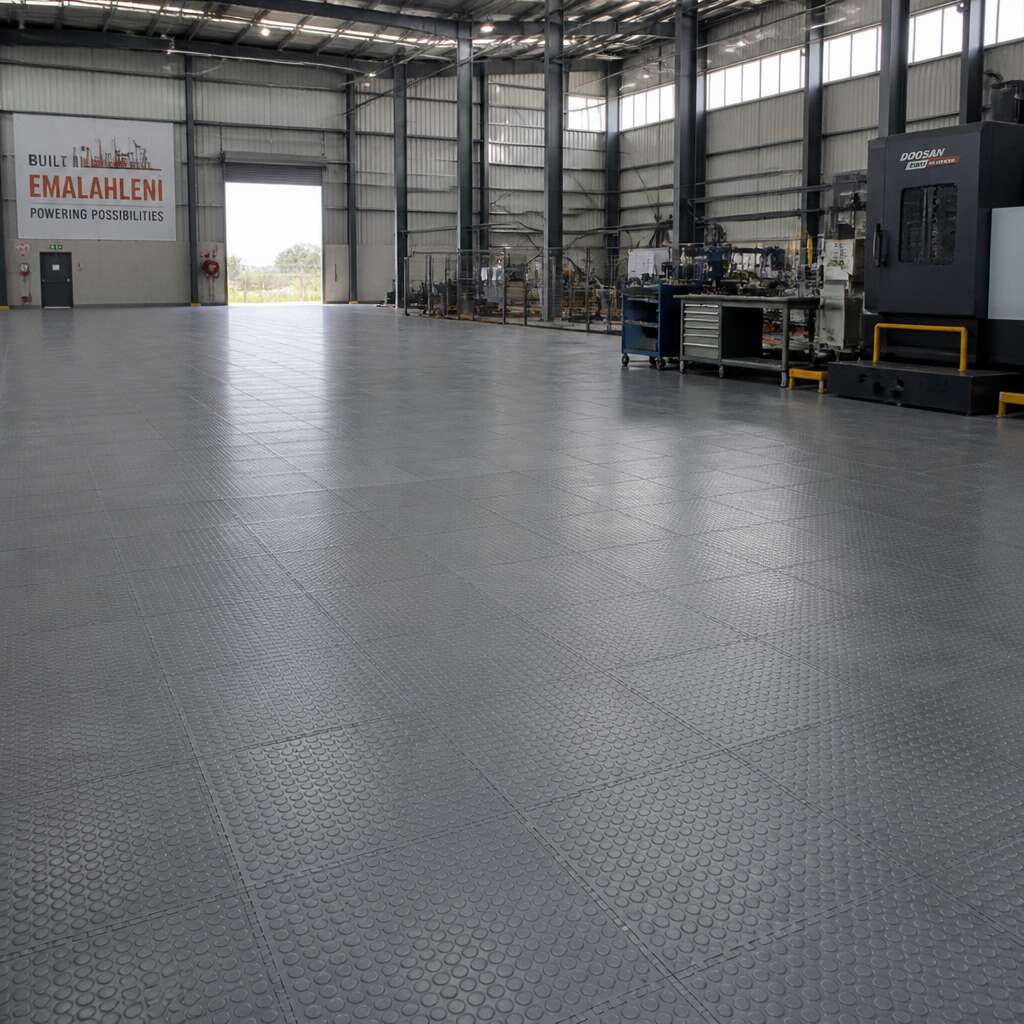
Heavy duty industrial flooring withstands forces that ordinary surfaces cannot absorb. Impact loads, chemical spills, and constant abrasion test every square metre. For facilities in Emalahleni, the demands are especially acute given the region’s mining and logistics operations. industrial pvc tiles emalahleni must endure continuous forklift traffic.
Consider the specifics. Dynamic load ratings, indentation resistance, and weld integrity determine whether a floor survives beyond its warranty period. I have seen installations fail because specifiers overlooked the coefficient of friction under wet conditions!
- Point load resistance for racking legs
- Thermal shock tolerance near kilns
- Chemical resistance to hydraulic fluids
Each factor shifts the material selection process. A floor that handles pedestrian flow will crumble under pallet jacks. The performance envelope must match the operational reality, and industrial pvc tiles emalahleni suppliers must prove their products meet those thresholds.
Environmental Factors in the Highveld Region
Emalahleni sits on the Highveld at over 1,500 metres above sea level, where the atmosphere thins and UV radiation intensifies. That altitude accelerates polymer degradation. Flooring that performs in coastal factories can embrittle here within two seasons. Thermal cycling is equally punishing, with diurnal swings of 20 degrees Celsius common in winter.
Dust also plays its part. Coal fines and mine tailings infiltrate surface layers, acting as an abrasive slurry under tyre contact. Hygroscopic salts in the local groundwater can migrate through concrete substrates, causing osmotic blistering in adhered systems. These factors matter when specifying industrial pvc tiles emalahleni.
Consider the microclimate variations:
- Condensation during summer thunderstorms
- Low humidity for months, prompting static buildup
- Windborne particulates from nearby operations
Comparing Flooring Options for Warehouses and Factories
Nearly two thirds of warehouse flooring failures originate in specification errors, not material defects. That reality forces facility managers to weigh options carefully. Concrete surfaces demand curing time, risk dusting, and may delaminate under point loads. Epoxy systems require pristine substrates and controlled temperatures. Industrial pvc tiles emalahleni offer a different path, one built around immediate installation and predictable performance.
The demands of forklift traffic, racking loads, and chemical spillages rarely appear in isolation. They combine. A floor must absorb impact, resist abrasion, and maintain slip resistance simultaneously! Comparing options means assessing each material against those combined pressures.
Key differences emerge when evaluating:
- Installation timelines, where adhesive backed tiles reduce downtime
- Repair protocols, since individual tiles replace without redoing bays
- Surface resilience under dynamic wheel loads
For me, that comparison clarifies why industrial pvc tiles emalahleni suit operations seeking long term cost control.
Key Benefits of PVC Flooring for Commercial and Industrial Spaces
Durability Under Constant Traffic
A single warehouse floor endures millions of wheel passes each year. That stress dictates downtime costs. Industrial pvc tiles emalahleni suppliers talk about impact strength, yet the real benefit is the gradual wear pattern. A vinyl tile absorbs repetitive load without cracking, unlike concrete or resin.
I have watched floors in busy distribution centres last five years because the tiles flex under strain. No chips from pallet jacks, no pedestrian ruts! A scuffed tile swaps in minutes, while a damaged concrete slab requires grinding or re-pouring.
- Reduces noise from heavy trolleys
- Provides a consistent grip even when oil is present
- Maintains flatness for safe equipment movement
This resilience cuts replacement frequency. The yearly cost of industrial pvc tiles emalahleni beats heavier materials because only the wear layer degrades. The gauged thickness dictates longevity.
Chemical and Moisture Resistance
A forklift tyre dragging hydraulic fluid across a factory floor leaves a slick trail. That same fluid left overnight etches pores into the concrete. The result is a permanent stain and a surface that keeps absorbing.
The polymer structure in industrial pvc tiles emalahleni resists this kind of intrusion. Vinyl chloride molecules create a dense barrier that chemical agents cannot penetrate. Moisture beads on the surface rather than seeping into the substrate. No capillary action, no swelling, no bacterial harbourage beneath the wearing layer.
Consider what a dairy processing unit throws at its floors: lactic acid, caustic soda, chlorinated rinses. A hot-welded PVC floor withstands all three without blistering or discolouration.
Routine testing of PVC flooring samples in aggressive environments shows:
- No weight change after immersion in dilute mineral acids
- Minimal surface effect after 24 hours of oil contact
- Zero delamination under constant humidity
That predictability matters in a working environment where a spill means a safety inspection.
Cost-Effectiveness Over the Long Term
Flooring accounts for roughly 85% of a building’s lifetime operating expenses, yet buyers fixate on the initial sticker price. That miscalculation hurts facilities every budgeting cycle. Whole-life costing reveals where industrial pvc tiles emalahleni genuinely excel: they compress capital expenditure while deferring replacement costs. Installation demands less prep time than poured alternatives, getting your operation back online sooner.
The real savings surface in upkeep. No waxing, no structural sealing, no specialised cleaning agents. A neutral pH detergent and a mechanical scrubber suffice for daily use.
- Reduced water consumption during cleaning routines
- Lower labour hours per square metre of maintenance
- Fewer consumables stockpiled in the janitorial closet
That arithmetic compounds across a decade, especially when factoring in the opportunity cost of a production floor closed for resurfacing.
Ease of Maintenance and Hygiene
Most facility managers underestimate how much a floor’s porosity costs them. A single split container of coolant can seep into unsealed concrete and contaminate the slab for months. industrial pvc tiles emalahleni eliminate that vulnerability entirely.
Daily hygiene requires a straightforward rhythm: one pass with a scrubber dryer, one neutral detergent solution. No strippers, no buffing cycles, no downtime waiting for coatings to cure. The surface also tolerates repeated exposure to industrial disinfectants without losing its finish.
The hygiene advantages accumulate across the floor plan:
- Heat-welded seams prevent moisture ingress at joints
- Low porosity restricts bacterial and fungal colonisation
- A smooth profile leaves no harbourage for debris around racking feet
For food preparation zones and cleanrooms, these properties directly support audit compliance. And for maintenance teams, they mean more predictable schedules and fewer emergency callouts. That trade-off pays dividends every shift.
Factors to Consider When Selecting PVC Flooring in Emalahleni
Assessing Load-Bearing Capacity
Forklifts in Emalahleni warehouses routinely exceed two tonnes, and the floor bears that weight daily. When assessing load bearing capacity, you need to think beyond the weight of a single tile. Industrial pvc tiles emalahleni suppliers often rate their products for static and dynamic loads, but those figures only matter if they match your actual conditions.
Consider these load types:
- Point loads from racking legs and machinery feet
- Rolling loads from forklift wheels, especially when turning
- Impact loads from dropped pallets or tools
The substrate matters just as much as the tile. A concrete slab with hairline cracks will transfer stress upward, and even the toughest PVC layer cannot compensate for a failing base. I have seen installations where the tiles performed perfectly, but the floor failed because nobody checked the subfloor’s compressive strength first. That is the difference between a floor that lasts and one that needs replacing within a year. For industrial pvc tiles emalahleni buyers, on site load testing is the difference between a sound investment and a costly mistake.
Slip Resistance and Safety Standards
A wet forklift tyre can turn a routine shift into a liability claim within seconds. For industrial pvc tiles emalahleni buyers, slip resistance begins with the coefficient of friction, not the surface texture. Standards such as DIN 51130 or BS 8204 classify ramp angles for walking and traffic zones, and test certificates should match the actual conditions on site.
Consider these safety factors:
- R9 to R11 ratings for general warehouse aisles
- Higher R12 or R13 near wash bays or coolant leaks
- Anti-static additives where dust ignition is a concern
The substrate’s slope and drainage also affect standing water. A tile with a matte finish may perform well under dry conditions yet fail when oil mist settles overnight. Visual inspection rarely reveals these risks. The British Standard for slip resistance ties directly to pedestrian and vehicular traffic categories, and industrial pvc tiles emalahleni installations need that same level of scrutiny because a fall costs more than any tile.
Customisation and Aesthetic Options
A floor’s colour can direct foot traffic as clearly as a painted line. Industrial pvc tiles emalahleni buyers treat aesthetics as a functional variable, not a decorative afterthought. Customisation allows a single floor to serve distinct zones simultaneously. You can specify a bright yellow border for forklift lanes and a muted timber effect for office areas within the same installation. I have seen recessed branding tiles work brilliantly in reception spaces! Consider these visual options:
- High contrast edge strips to define racking bays,
- Large format printed designs mimicking stone or ceramic,
- Recessed arrow and logo tiles for safety routes.
In Emalahleni’s dusty environment, a lighter base tone hides fine coal dust between wash downs, which lowers maintenance frequency. The right customisation for industrial pvc tiles emalahleni balances visibility with upkeep, making the floor a proactive part of workflow.
Local Availability and Supply Chain Considerations
A flooring installation in Emalahleni can stall for weeks when stock sits in a distant warehouse. Local suppliers of industrial pvc tiles emalahleni maintain buffer inventory sized for Highveld demand, which shortens lead times. I have seen a pallet shortage delay an entire bay by nine days, a cost that outweighs any marginal price saving.
Ask about delivery capacity directly! Does the supplier run their own fleet or rely on couriers? Can they confirm delivery windows in writing? The N4 corridor causes frequent delays, so a supplier who plans around this is worth more than one who quotes faster.
- Confirm stock is physically in Emalahleni, not on backorder
- Check warranty coverage for installation labour, not just material
- Verify local technical support for seam welding issues
Supply chain visibility matters after the order. When sourcing industrial pvc tiles emalahleni, suppliers who publish stock levels or provide direct warehouse contact separate reliable partners from middlemen who forward paperwork.
Compliance with Industry Regulations
A single non-compliant floor can halt production faster than any equipment failure. In Emalahleni, inspectors check flooring against fire safety regulations, emission limits, and municipal building codes. Industrial PVC tiles emalahleni suppliers who document these certifications remove guesswork from procurement.
Compliance starts with fire retardancy classifications and volatile organic compound thresholds. Ask for test certificates that match current SANS standards. Verify that the tile’s smoke emission rating suits enclosed workspaces. Manufacturers alter formulations between batches, so confirm each delivery matches the certified specification.
- Request batch-specific certificates
- Check current SANS accreditation
- Confirm fire separation requirements
When sourcing industrial pvc tiles emalahleni, inspect the paper trail as carefully as the product. An inspector needs traceable evidence, not verbal assurances.
Installation Best Practices for Industrial PVC Flooring
Preparing the Subfloor
A poorly prepared subfloor accounts for nearly 80% of premature flooring failures. That statistic should focus any installation plan for industrial pvc tiles emalahleni. The subfloor is the foundation, and skipping its preparation invites costly consequences.
Start with a moisture test. Concrete slabs in the Highveld often retain moisture long after they appear dry. Use a hygrometer or calcium chloride test to confirm readings below 75% RH. Next, check for flatness. A 3mm deviation over a 2-metre straightedge is the maximum tolerance for PVC tiles.
– Remove all dust, grease, and curing compounds.
– Repair cracks and spalled areas with a suitable patching compound.
– Grind or shot-blast the surface to create a mechanical key.
Finally, allow the adhesive to reach its flash point before laying tiles. Rushing this step causes bubbles and delamination. I have seen too many installations fail at this exact stage. Proper preparation ensures the floor performs as designed.
Acclimatisation and Adhesive Selection
The difference between a durable floor and a failed one often comes down to 48 hours of waiting. Acclimatisation is non-negotiable. Industrial pvc tiles emalahleni must sit in the installation area, unwrapped, to match ambient temperature and humidity. In Emalahleni’s Highveld conditions, this step prevents dimensional shifts that cause edge curling.
Adhesive selection requires equal attention. Pressure-sensitive adhesives work well for general warehousing. Hard-setting adhesives are better for permanent installations under heavy traffic. Before spreading adhesive, I always review its technical datasheet. Here is what matters:
- Open time aligns with your installation speed.
- Solvent levels comply with indoor air quality standards.
- The bond passes a peel test after 24 hours.
Choosing the wrong adhesive leads to creeping tiles and costly callbacks.
Seaming and Welding Techniques
Half of all premature industrial floor failures begin at the seam, not under the load. Seaming and welding are where technique truly shows. I always cut both sheet edges simultaneously with a sharp knife, ensuring a perfect butt joint without gaps or overlaps. That is a non-negotiable first step!
For heat welding, I use a hot air gun set to 400 degrees Celsius. The welding rod must be of the same formulation as the tiles, otherwise you get a weak bond. The ideal seam shows a slight bead after cooling, which I then trim twice, once with a crescent knife and once with a floor scraper.
- Clean the seam with a vacuum to remove dust.
- Pre-weld the seam to soften the edges.
- Feed the rod at a slow, steady pace.
- Trim while the weld is still warm for a flush finish.
Getting these details right matters because industrial pvc tiles emalahleni installations face thermal cycling. A poorly welded seam will crack over time, allowing moisture ingress, which undermines the entire floor. The final weld should feel absolutely smooth to the touch, with no visible depression if you run your fingernail across it.
Curing Time and Post-Installation Care
Curing time is where patience pays off. After the final weld cools, the adhesive needs a solid 24 to 48 hours before foot traffic, and a full 72 hours before heavy machinery rolls in. I have seen floors fail because someone rushed this window. It is not worth the risk.
Post-installation care shapes the first few weeks. Keep the surface clean with a soft brush or dust mop. Avoid harsh chemical cleaners for the first month, as they can soften the weld seams. And never drag pallet jacks across fresh flooring without protection.
Here is the thing about industrial pvc tiles emalahleni installations: they reward a measured approach. Give the floor time to settle, and it will give you years of reliable service.
Maintenance and Longevity of PVC Floors in Harsh Conditions
Daily Cleaning Routines
One study found that proactive cleaning extends commercial flooring lifespan by up to 300%. In Emalahleni, where airborne dust settles on every surface, daily cleaning is the primary defence against premature wear.
For industrial pvc tiles emalahleni installations, the routine matters more than the products you use. A dry mop removes abrasive grit before it embeds into the surface. Follow with a damp mop using a neutral pH solution. Avoid bleach or solvent based cleaners.
- Sweep or vacuum high traffic zones every four hours
- Damp mop once per shift
- Deep clean weekly with a single disc machine
Consistency beats intensity! A quick daily pass protects the floor far better than an aggressive weekly scrub.
Dealing with Abrasive Dust and Debris
The dusty atmosphere in Emalahleni does not just settle on machinery; it acts as a persistent abrasive agent on your flooring investment. For industrial pvc tiles emalahleni, the microscopic grit that enters on forklift tyres and work boots functions like sandpaper under pressure. Over time, this debris grinds into the wear layer, dulling the finish and creating micro-scratches that trap further dirt.
Preventative measures are essential to counteract this constant onslaught. While daily routines handle surface debris, longevity relies on a maintenance schedule that targets the embedding of particulate matter. The physical action of this abrasive dust is the primary threat to surface integrity, not the chemical composition of the floor itself.
Specific vulnerabilities appear where the tile meets the seam, as well as around heavy traffic lanes. These areas suffer the most from concentrated friction. A proactive approach involves regular inspection for wear patterns and deep cleaning which lifts the embedded particles before they cause permanent damage. The correct use of a single-disc machine with a suitable pad is crucial to achieving this without compromising the protective surface layer.
– Focus on the entry and exit points where abrasive materials enter the facility
– Implement a colour-coded mopping system to prevent cross-contamination of cleaning agents
– Inspect the condition of the PVC tiles monthly to identify early signs of surface wear
We have observed that facilities which manage the external dust ingress at the source, through matting systems and airlocks, extend the lifespan of their industrial pvc tiles emalahleni significantly. Simply put, a deep clean that is too aggressive and performed too infrequently is far less effective than controlled, consistent maintenance. The physical integrity of the tile remains intact when you prevent the abrasive action from ever becoming a constant factor in the daily operation.
Repairing Scratches and Indentations
Damage is inevitable. Premature failure is not! Scratches from dragged pallets and indentations from static loads are the two most common culprits in industrial facilities. The difference between a floor lasting a decade and one failing early often comes down to how quickly these blemishes are addressed.
Repairing scratches in industrial pvc tiles emalahleni demands a different approach than domestic flooring. The repair method depends on severity:
- Shallow scratches can be buffed out with a fine abrasive pad.
- Deeper gouges require a heat gun and a colour-matched filler rod.
- Matching the repair compound to the tile’s formulation is critical.
Done correctly, the weld becomes nearly invisible.
Indentations are another matter. They indicate the subfloor or backing layer has been compromised. Machinery feet without spreader plates create permanent depressions. Once an indentation exceeds two millimetres, the tile’s integrity is at risk.
When to Consider Refinishing or Replacement
I have watched floors fail within five years because nobody checked the maintenance schedule. Maintenance in harsh conditions is about structural survival, not cosmetics. The useful life of industrial pvc tiles emalahleni hinges on how quickly you respond to surface changes.
Refinishing makes sense when the wear layer remains intact but looks dull. Replacement becomes necessary when the wear layer has gone completely and the pattern shows through. Watch for these warning signs:
- Dust that settles back within hours of cleaning
- Pattern fading concentrated in specific traffic lanes
- Seams opening despite proper welding
When industrial pvc tiles emalahleni reach this state, refinishing only delays the inevitable. Replacement is the honest answer. Delaying it costs more in downtime and repairs.



0 Comments