Understanding Heavy-Duty Flooring Requirements
What Makes a Flooring Material Forklift-Ready
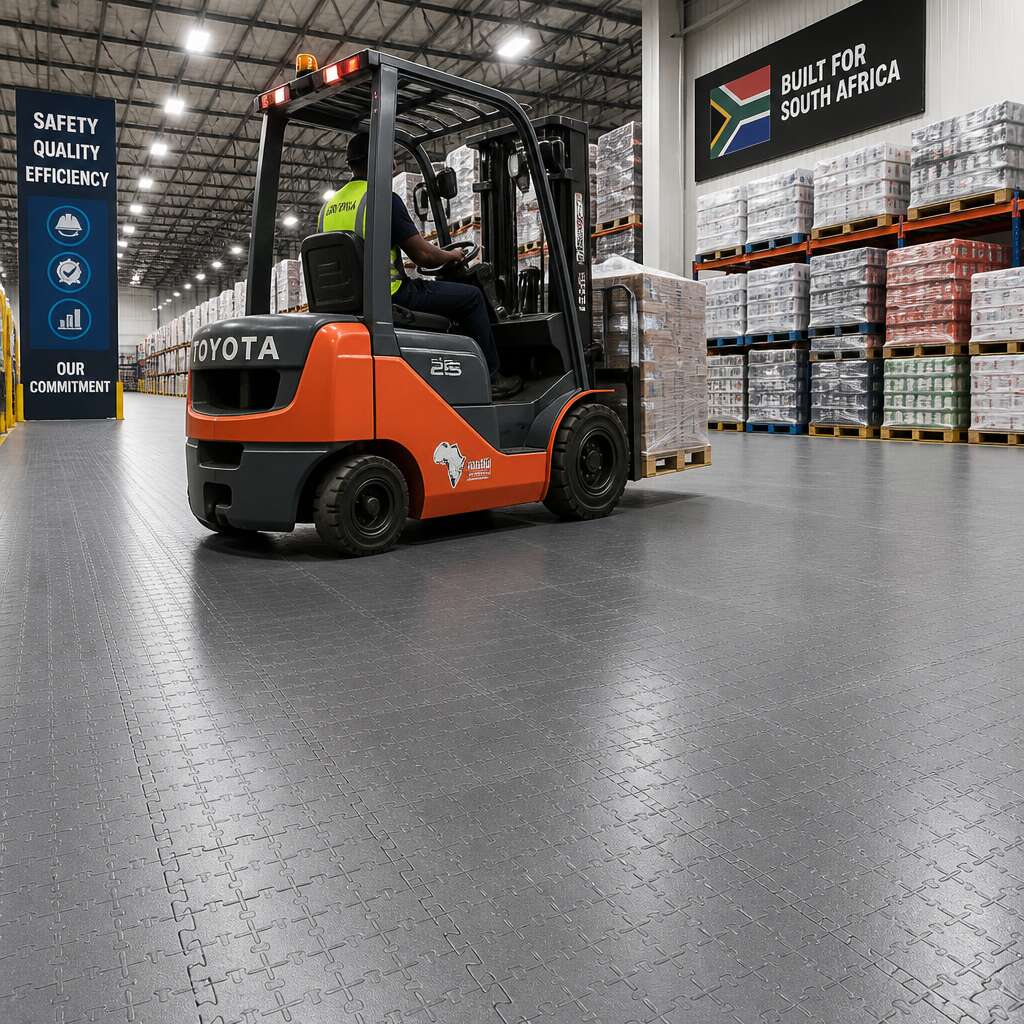
Forklifts can exert point loads exceeding three tonnes on two hard wheels. That pressure crushes ordinary flooring. For warehouses, the surface must handle this stress without cracking or lifting. This is where forklift rated pvc floor tiles south africa have gained attention, yet the rating depends on more than thickness.
Impact resistance matters. A pallet dropped from a mast strikes with kinetic energy. The material must deflect that force rather than fracture. Rolling load fatigue is equally critical, since constant traffic creates micro-cracks that widen over time.
- Wear layer thickness determines resistance to abrasion from tyre treads.
- Density affects whether the tile compresses permanently under static racking.
The interaction between wheels and surface is often underestimated. Smooth wheels slide; rough wheels gouge. I have seen floors fail because the wheel pattern was ignored, not because the load exceeded expectations.
Common Wear and Tear in Industrial Environments
Forklift rated pvc floor tiles south africa are often selected for their impressive static load limits, but the real enemy in a working warehouse is cumulative degradation. Facilities now run multiple shifts, which means surfaces face near constant motion. In this environment, damage seldom arrives as a single dramatic event. It arrives as incremental wear that quietly compounds.
Abrasion from wheel scrub is the baseline threat. However, the deeper concern is chemical erosion from hydraulic fluid leaks or battery acid spills. These substances seep into seams and soften the tile’s binder over time. This process weakens the structural integrity long before the visual surface shows distress.
– Static loads from racking feet that leave permanent indentations
– Thermal cycling from loading docks that cause expansion and contraction
– Substrate moisture that pushes upward and creates blistering at the edges
Shifting loads create a secondary issue. When a pallet truck turns sharply, it creates torsional forces that twist the flooring substrate. The tile needs to maintain dimensional stability under this lateral stress, not just vertical compression. A floor that fails here shows lipping edges and separation at the welds.
The most deceptive damage source is the drag of metal pallet legs during repositioning. This action creates deep scoring that compromises the wear layer entirely. Once the protective surface is breached, moisture and debris accelerate the decay. Choosing forklift rated pvc floor tiles south africa only solves the problem if the product genuinely addresses this spectrum of abuse, not merely the headline load figure.
Comparing PVC to Other Industrial Flooring Options
The material science behind forklift rated pvc floor tiles south africa is where the marketing hype separates from operational reality. Most facility managers compare price per square meter, yet the real metric is total lifecycle cost under specific load dynamics. Concrete offers raw compressive strength, but it lacks forgiveness. When a load shifts, concrete transfers the shock directly to the pallet and the racking structure. Epoxy coatings provide a seamless surface, yet they become brittle with age and chip under point loads.
A comparative assessment reveals specific operational differences:
1. Resistance to thermal expansion differs significantly between materials
2. Repair speed varies from 48 hours for cured coatings to a single shift for modular tiles
3. Substrate preparation requirements change the installation timeline completely
PVC tiles earn their rating through engineered flexibility, not brute force. This elasticity absorbs energy and redistributes it across the subfloor. The critical distinction appears during the thermal cycling we discussed earlier, where rigid surfaces crack and modular systems maintain their integrity.
The Role of Impact and Load-Bearing Capacity
A loaded forklift can impose three times its static weight on a floor during braking or when passing over an uneven joint. Impact events arrive as sharp, localised shocks that test every material layer beneath the wheels. A dropped pallet multiplies stress far beyond the printed load capacity.
Forklift rated pvc floor tiles south africa handle this challenge through engineered deflection rather than brute rigidity. The tile compresses slightly at the contact point, then recovers. This movement redistributes stress across a wider area, sparing the subfloor from concentrated punishment.
The key loads to consider in any heavy-duty specification:
- Point loads from pallet feet and rack legs
- Rolling loads from wheel contact patches
- Impact loads from dropped stock or uneven docking
Each behaves differently. A material that survives one may still fail under another. Forklift rated pvc floor tiles south africa are tested against all three.
Key Technical Specifications to Evaluate
Thickness and Density Factors for High Traffic Areas
A 2mm difference in tile thickness can reduce a floor’s service life by years. I have watched forklift rated pvc floor tiles south africa fail at 3mm in busy dock aprons, while 5mm tiles in the same facility lasted a decade. Thickness alone is misleading. Density predicts indentation under repeated wheel loads.
When evaluating high traffic areas, I check three specifications!
- Thickness: 4mm minimum, 5mm preferred for constant forklift traffic.
- Density: 1,900 kg/m³ or higher to resist compressive set.
- Indentation resistance: less than 0.1mm residual deformation after a 1,000kg point load.
Surface Finish and Slip Resistance Ratings
A glossy floor might look pristine in a showroom, but in a working dock it becomes a hazard the moment oil spills. Slip resistance for industrial PVC is measured by pendulum test values, and the practical threshold for forklift rated pvc floor tiles south africa is R11 or higher. Anything less invites trouble during tight turns.
I have flagged several installations where the tile passed load tests yet failed on traction. The finish is not decorative, it is functional.
The specifications I check first:
– R11 slip rating or above
– A matte or embossed texture, never a glossy coating
– A dynamic coefficient of friction above 0.6 when wet
– No polished additives that wear away under tyres
That last one catches many buyers off guard! For forklift rated pvc floor tiles south africa, the surface texture is the decisive safety feature.
Chemical and Oil Resistance for Warehouse Floors
Every litre of hydraulic fluid that drips from a pallet truck finds its way to the floor. In a busy warehouse that adds up to hundreds of litres per year, and for forklift rated pvc floor tiles south africa, the chemical formulation of the PVC determines whether those spills cause swelling, discolouration, or structural softening.
Standard vinyl absorbs mineral oils and diesel over time, which makes interlocking edges shift and buckle. I always request the manufacturer’s chemical resistance chart before specifying forklift rated pvc floor tiles south africa. The chart should list immersion test results, not surface wipe tests.
Key agents to check:
- Hydraulic fluids and transmission oils
- Diesel and kerosene
- Battery acid dilutions
- Brake fluid
Pay attention to the plasticiser system. Poor plasticisers migrate when exposed to solvents, leaving a sticky film that traps dust. A weight gain test after 24 hours in hydraulic oil reveals more than any brochure.
Fire Safety and Static Dissipative Properties
Fire safety in a warehouse is often reduced to a smoke detector test, but the real hazard sits under the wheels of every forklift. A floor that ignites slowly can buy evacuation time. Forklift rated pvc floor tiles south africa should carry a fire classification rating such as EN 13501-1 class Cfl, determined by radiant panel tests rather than a simple match test.
Static electricity is the quieter threat. Forklift movement across a floor generates charge, and without dissipation, a spark can ignite solvent vapours. The relevant specification is surface resistivity in ohms per square. Look for values between 10^5 and 10^9, which places the flooring in the static dissipative range.
- EN 13501-1 fire classification, confirmed by radiant panel testing
- Surface resistivity between 10^5 and 10^9 ohms per square
- Electrostatic discharge testing per EN 1815 for heel and floor friction
Request third party certificates for these properties. Many suppliers quote figures from the raw compound, but the finished tile performs differently once plasticisers and stabilisers are blended in. The tested tile is the one that matters.
Testing Standards and Certification Bodies
The truth about forklift rated pvc floor tiles south africa often lives in the fine print of a data sheet. A glossy brochure might promise durability, but the actual laboratory reports tell the story. Most importers rely on a certificate of analysis from the raw material supplier. That is a mistake. The finished tile behaves differently once colourants, plasticisers, and stabilisers are mixed in. The tested sample must be the production tile, not the base compound. Demand to see the test reports for the specific batch you intend to purchase.
Certification bodies vary in credibility. A South African National Accreditation System (SANAS) accredited laboratory carries more weight than a foreign facility without recognised oversight. Look for test methods tied to ISO standards, particularly ISO 24344 for flexibility and ISO 10581 for homogeneity. For fire performance, the EN 13501-1 standard remains the benchmark in the UK market. Your supplier should also document compliance with the Construction Products Regulation (CPR) if they export to Europe. This ensures the product meets a baseline of safety and performance.
– Verify the test report matches the product batch number.
– Check the laboratory’s accreditation status.
– Request documentation for both abrasion and impact resistance.
South African suppliers often hold SABS approval, but this mark is not a universal guarantee of forklift suitability. The SABS mark covers many consumer products. You need specific evidence of industrial grade performance. The floor must comply with the SANS 10400 regulations for fire safety in buildings. Additionally, request the manufacturer’s declaration of performance (DoP) which lists the essential characteristics of the tile. If a supplier hesitates to share these documents, treat that as a red flag.
The role of third party testing cannot be overstated. An independent lab removes the conflict of interest that exists when a manufacturer tests its own product. For forklift rated pvc floor tiles south africa, insist on testing that mirrors real world conditions. The laboratory should simulate the rolling load of a forklift, not just a static weight. This is where many products fail. The relationship between the test method and the application is frequently overlooked. A tile that passes a simple impact test might shatter under a dynamic load from a pallet jack moving at speed. Insist on dynamic testing and ask for the raw data, not just the summary report.
Installation Best Practices for South African Factories
Preparing Concrete Subfloors for Perfect Adhesion
Over 80% of premature floor covering failures trace back to inadequate subfloor preparation. A concrete slab’s surface profile, pH, and moisture content dictate whether forklift rated pvc floor tiles south africa survive daily wheel loads. Skip the prep, and you’ll see curling edges within months.
Grind to a CSP 3 profile to remove laitance and expose pores. Vacuum twice with a HEPA filter. For oil spots, use chemical emulsifiers rather than grinding, because abrasion drives hydrocarbons deeper. I always map moisture vapour emission readings on a 10 metre grid; one hotspot can compromise the whole adhesive bed.
- Repair cracks wider than 0.5 mm with flexible polyurea filler
- Apply moisture barrier primer when MVR exceeds 3 kg/m² per 24 hours
- Confirm pH between 9 and 10 before trowelling adhesive
Handling Temperature and Humidity Variations
Temperature swings of 15°C between morning and afternoon are common in Highveld factories. That variation directly affects how forklift rated pvc floor tiles south africa expand and contract during installation. I have seen crews lay a warehouse floor in the morning, then watch panels buckle by lunchtime.
The adhesive needs a stable environment. Store tiles in the actual installation area for 48 hours before work begins. Keep the factory climate controlled. Do not rely on ambient conditions, because South African winters bring dry air and summers bring coastal humidity.
- Maintain room temperature between 18°C and 28°C
- Keep relative humidity below 65%
- Check dew point against slab temperature hourly
Trowel adhesive only when the slab temperature sits within 3°C of the tile temperature. If the factory is not yet sealed, postpone the job until windows and doors are installed. For forklift rated pvc floor tiles south africa, this discipline prevents the most common failure mode: edge curling from thermal stress.
Joint and Seam Sealing Techniques
A staggering 80% of premature floor failures trace back to poorly executed seams, not the tile itself. For forklift rated pvc floor tiles south africa, the joint is the first line of defense against liquid ingress and mechanical peeling. The most frequent mistake I observe is rushing the seam sealing process to get the warehouse back in operation.
Proper joint preparation demands immediate action. Weld the seams within 24 hours of laying the tiles. This prevents dust and grime from settling into the gap, which compromises the bond of the welding rod. When you cut the V-groove, ensure it is clean and free of loose PVC particles. Use a sharp, hooked knife for a uniform channel.
Before you even begin, verify the compatibility of your welding rod with the tile manufacturer. Using a generic rod can cause a chemical reaction that softens the tile edges. A solid weld requires a specific temperature setting on your hot air gun. Too cool, and the rod will not melt into the substrate. Too hot, and you risk scorching the tile.
– Clean the groove with a vacuum and a stiff brush.
– Check the air gun temperature against a surface thermometer.
– Trim the weld bead flush with the surface in two passes.
The trimming step is often botched. The first pass removes the bulk of the excess material, and the second pass should be a shaving cut to bring the seam flush with the tile face. Leave the weld slightly crowned then shave it down. This creates a dense, impermeable seal. For forklift rated pvc floor tiles south africa, a flush weld prevents the forklift wheels from catching the edge and creates a continuous hygienic surface.
Allowing for Expansion and Contraction
Thermal movement is the silent killer of warehouse flooring. When you install forklift rated pvc floor tiles south africa, the concrete slab underneath expands and shifts at a different rate than the PVC itself. That mismatch creates stress at the seams and edges.
Proper installation starts with controlled gaps. Leave a 4 to 5 millimetre void around every column and perimeter. Use compressible filler strips to keep the gap open during the welding phase. Then seal it with a flexible polyurethane compound that can handle repeated compression.
- Cut the tiles to fit loosely, never forcing them into position.
- Stagger the expansion joints across the bay to avoid a continuous weak line.
I once watched a contractor glue tiles tight against the wall. Within a month, the floor had lifted in a wavy pattern. Trust the movement, plan for it, and the surface stays true.
Professional Installation vs. DIY Considerations
The outcome of any installation hinges on preparation, not the product. For a warehouse floor handling constant traffic, the skills of the installer dictate the lifespan of the surface. Hiring a specialist crew with experience in heavy duty flooring systems is a worthwhile capital investment, especially when the cost of downtime for repairs is factored into the equation.
DIY installation of forklift rated pvc floor tiles south africa is an option for smaller storage areas. However, the precision required for welding seams and levelling the substrate is a skill honed over years. A professional team arrives with laser levels and the correct profiling tools. They also understand the specific climate challenges in South African factories, where humidity levels fluctuate dramatically.
Consider these non-negotiable steps for any installation:
– Ensure the concrete slab has cured for a minimum of 28 days before laying any tiles.
– Use a moisture meter to verify the substrate is dry.
– Apply the adhesive with a notched trowel to guarantee full coverage.
The temptation to save money by doing it yourself often leads to premature failure. Companies that attempt this route frequently find themselves replacing sections within a year. The complexity of aligning tiles perfectly under industrial conditions is a job for trained technicians. Choose professionals who can verify their expertise with references. It is the only way to protect your investment in forklift rated pvc floor tiles south africa for the long term.
Cost Implications and Project Timelines
Many factory managers focus on the per square metre price of forklift rated pvc floor tiles south africa and overlook the installation programme. The actual cost of downtime often exceeds the flooring bill by a factor of five. A 500 square metre bay typically takes two to three days with a four person crew. That timeline shrinks if you book a weekend slot, but overtime rates apply.
Consider the cost drivers:
– Crane or lift hire for moving pallets of tiles.
– Shift allowances for after hours work.
– Temporary storage of stock during installation.
Ask for a fixed completion date in writing. In South African factories, load shedding schedules can disrupt tooling. Confirm your contractor has battery backups for grinding and welding equipment. That planning turns a costly disruption into a controlled project.
Maintenance and Longevity Strategies
Daily Cleaning Routines to Prevent Damage
The most expensive forklift rated pvc floor tiles south africa can deliver decades of service, yet their lifespan hinges on the mundane, daily battle against abrasive grit. A single particle of sand trapped under a tyre acts like a grinding wheel, slowly scoring the protective wear layer. Warehouses that neglect this fundamental truth often face premature replacement, a cost that dwarfs the price of a decent industrial vacuum cleaner.
Proactive maintenance is not about complex chemicals or expensive machinery. It hinges on consistent, systematic intervention. In my experience, the operations that see the best return on their investment treat the floor as a piece of precision equipment, not just a surface.
- Implement a dedicated sweeping schedule for high traffic zones, ideally every two hours.
- Position heavy-duty entrance mats to capture the bulk of external debris before it travels further.
- Use a vacuum with a HEPA filter to remove fine dust that brooms simply redistribute into the air.
Beyond the sweeping routine, immediate spill response is non-negotiable. The chemical resistance of the tile is robust, but prolonged exposure to hydraulic fluid or brake dust can leave a stubborn film that dulls the finish. This requires a neutral pH cleaner rather than aggressive solvents. Managing this proactively protects the aesthetic and ensures the forklift rated pvc floor tiles south africa continue to provide the necessary traction for safe operation, year after year.
How to Handle Forklift Scuffs and Marks
Scuffs on forklift rated pvc floor tiles south africa are a predictable consequence of daily operations. They are not necessarily a sign of failure. A dark rubber mark from a sudden stop or a scrape from a pallet edge often looks worse than it actually is. The key is understanding which marks are superficial and which indicate damage to the wear layer itself.
I’ve seen operations panic over a heavy scuff mark and consider drastic measures like floor replacement. That is rarely necessary. Most marks reside on the surface of the protective urethane coating. The recovery process is straightforward and requires no specialised equipment. It involves targeting the mark without compromising the tile’s slip-resistant finish.
Here is the sequence I recommend for dealing with persistent scuffs:
1. Locate the mark and use a hard plastic scraper to lift any raised rubber or plastic residue. Avoid metal blades, as they will gouge the tile.
2. Apply a small amount of a citrus-based or neutral pH degreaser directly to the scuff. Allow it to dwell for 60 seconds to break the bond.
3. Agitate the area with a stiff nylon brush or a standard floor scrubber pad. Work in a circular motion, letting the solution do the work.
4. Rinse the area clean with water and dry it with a microfiber cloth to validate the removal quickly.
If the mark persists, you are dealing with micro-abrasion of the embossed texture. This requires a more deliberate intervention. Dampen a fine mesh abrasive pad and buff the affected spot gently. You are essentially smoothing the roughened peaks of the tile. Once the mark is gone, the area may appear slightly shinier than the surrounding floor. This difference typically fades with general traffic. Maintaining this discipline preserves the traction and aesthetic integrity of the floor for years.
Periodic Sealing and Recoating Schedules
Forklift rated PVC floor tiles south africa protect against visible damage, but the unseen degradation of the protective wear layer is what truly determines lifespan. Operators often overlook the slow chemical breakdown caused by constant tyre friction and cleaning agents. This passive erosion reduces the tile’s ability to repel oil and scuffs. Regular maintenance schedules should focus on refreshing that sacrificial top coat.
A practical recoating cycle depends on traffic density and the weight of your equipment fleet. Reapplying a thin urethane layer every 18 to 24 months restores gloss and slip resistance without the cost of full replacement. You do not need to strip the entire tile. You simply need to clean the surface thoroughly, allow it to dry completely, and roll on a compatible sealant.
Consider these indicators that your floor is ready for a fresh coat:
– Noticeable fading in high traffic lanes, even after deep cleaning.
– Water no longer beads on the surface, meaning the seal has failed.
– Scuff marks resist normal chemical cleaners.
– A slight roughness becomes visible under raking light, indicating wear.
Recoating between these intervals prevents permanent micro-cracking in the embossed texture. When done correctly, the new layer bonds and mimics the original performance. The key is timing your intervention before the substrate is exposed to moisture. Once water penetrates the PVC core, the tile begins to swell and delaminate from the concrete below.
A disciplined schedule extends the performance of forklift rated pvc floor tiles south africa beyond typical expectations. It keeps the floor looking consistent across the entire warehouse and reduces the need for spot repairs. Treat the sealant as a disposable component, not a permanent fixture. This simple change in perspective makes the financial case for high quality flooring far more compelling.
Protecting Floor Edges and High-Risk Zones
Edges and transition zones are where forklift rated pvc floor tiles south africa face their most brutal punishment. The main traffic lanes show wear, sure, but the perimeter is where sheets lift and corners chip. A fork’s front wheel catching a tile edge at an angle creates immense localized pressure. This pressure pries the locking mechanism apart, exposing the adhesive underneath to dirt and moisture.
Common sense says to protect these zones with metal threshold strips. But many installers skip this step to save money, relying instead on the tile’s inherent strength. That is a mistake. The PVC core flexes, but a continuous steel edge does not. The disparity in flex leads to the tile fatiguing faster at the boundary. A practical strategy is to designate the first two meters from every door and loading bay as a sacrificial zone. Use a thicker gauge tile there, or apply a heavy-duty urethane edge coating that is renewed more frequently.
A clear process for managing these high-risk zones keeps the entire floor healthy:
1. Identify every aisle end, doorway, and column base where turning is frequent.
2. Apply a reinforcing sealant bead along these edges during the initial installation.
3. Schedule a visual inspection of these specific points every quarter.
4. Replace or re-bond any lifted sections immediately to prevent the spread of damage.
Neglecting the edges compromises the entire installation. Once a corner curls, it becomes a trip hazard and a magnet for debris, which accelerates the breakdown of adjacent tiles. A proactive edge strategy is the cheapest insurance you can buy for your flooring asset. It ensures the forklift rated pvc floor tiles south africa maintain a sealed perimeter, keeping the core dry and the visual line clean, which directly contributes to the longevity of the entire floor system.
Signs That Flooring Needs Replacement
Forklift rated pvc floor tiles south africa are built to endure, but even the toughest surface eventually sends out distress signals. The question becomes repair or renew. A floor that has served five hard years may show purely cosmetic wear. Cracks that radiate from impact points tell a different story.
The key difference between maintenance and replacement lies in the substrate. Damage confined to the wear layer often allows a localized patch. If the tile has lost its bond to the concrete below, patching only hides the issue. Delamination spreads silently.
Some signs demand immediate attention:
Loose tiles that rock under wheel pressure.
Visible gaps between tiles where debris collects.
Crumbling edges near loading docks.
A spongy feeling beneath the wheels.
For forklift rated pvc floor tiles south africa, these indicate structural failure, not surface wear. Continuing to operate on a failing floor accelerates damage to forklift components and increases load instability risk. Replacing a section before it compromises the entire bay costs far less than a full floor failure. Regular load testing provides objective data on when the floor has reached its ceiling.
Navigating Local Suppliers and Market Trends
Top South African Manufacturers and Distributors
The South African flooring market has shifted noticeably over the past decade. Demand for forklift rated pvc floor tiles south africa now comes from warehouses, bottling plants, and cold storage facilities across Gauteng and the Western Cape. Local manufacturers such as Flux Flooring and Tile Africa have stepped up production, but distributors often hold the key to faster lead times. One importer in Durban told me that stock levels fluctuate wildly every quarter.
When vetting a supplier, check three things.
- Verify SABS approval for impact resistance.
- Ask for load test reports on the exact tile thickness you need.
- Confirm the installer’s certification, not just the product.
Johannesburg distributors tend to carry denser European imports, while coastal suppliers favour tiles with higher moisture tolerance. That regional split matters when your concrete subfloor sits near the ocean or in a dry highveld climate. Pairing the right source with your site’s unique traffic pattern makes all the difference. Honestly, a short phone call with a local rep can save weeks of downtime.
Price Ranges per Square Meter
A Durban buyer once told me his R180 per square metre quote from 2023 nearly doubled by early 2025, not because of raw material costs, but due to shipping delays and forex swings. That volatility is baked into the current market for forklift rated pvc floor tiles south africa. You are not just paying for the tile itself, you are paying for the supplier’s logistics network and their willingness to hold stock.
Price ranges typically reflect density and warranty terms more than brand name. Johannesburg distributors often sit at R350 to R520 per square metre for 3.5mm European imports with fibreglass interlayers. Coastal suppliers, meanwhile, push moisture-tolerant variants from R280 to R450, though these sometimes carry lower impact ratings.
– Budget grade (2.5mm homogeneous): R250 to R320
– Mid range (3.0mm with fibreglass): R380 to R460
– Premium (3.5mm plus, high density): R500 to R650
The shift toward local production has steadied some quotes, especially for Flux Flooring’s heavier rolls. But the reality remains that your final price hinges on subfloor preparation costs, which often exceed the tile price itself. Gauteng buyers report paying R700 per square metre all-in for a certified install, while Cape Town rates run slightly higher due to moisture barrier requirements. Compare those figures against your forklift’s turning radius, and you will see why the cheaper tile rarely wins.
Warranty Options and After-Sales Support
Factory managers often underestimate how much a warranty reveals about a supplier’s true confidence. When you ask three different distributors about long term warranties on forklift rated pvc floor tiles south africa, you get three different interpretations of what “guaranteed” actually means. One Cape Town contractor I spoke with learned this the hard way when his warranty claim for delamination was rejected because the installer hadn’t logged the correct moisture readings on the subfloor, despite the tile itself being fine.
A robust warranty is a direct reflection of material quality and the supplier’s relationship with the manufacturer. European mills generally stand behind their product for 10 to 15 years, but South African distributors often cut that down to five years to reduce their own risk exposure. Watch for clauses that void coverage due to improper maintenance or chemical exposure. The most stringent agreements require quarterly inspections by the supplier, which adds R80 to R150 per square metre to the lifetime cost.
Some local suppliers offer tiered protection based on how you plan to use the floor.
1. Basic coverage protects against manufacturing defects only, typically lasting two years.
2. Standard warranties extend to small area wear, often capped at 25% of the surface.
3. Full performance guarantees cover impact damage and staining, but require approved installation teams and specific cleaning products.
Before signing anything, request references from other warehouses in your sector. That consultation costs nothing and tells you more about after-sales support than any brochure ever will. The real value of a premium floor appears in the third year, when cheaper alternatives start showing wear patterns that a manufacturer’s rep will happily argue are “normal operational wear”. Keep records of every cleaning cycle and any forklift incident. In South Africa, several disputes have gone to arbitration based on photographic evidence of maintenance logs, not the physical condition of the floor. Selecting a supplier who responds to a frantic Monday morning phone call is often worth more than a marginally better density rating on the spec sheet.
Eco-Friendly PVC Alternatives Available Locally
Johannesburg distributors quote the same European product at wildly different prices, which reveals a fragmented market for forklift rated pvc floor tiles south africa. Some suppliers are merely reselling imported stock without technical backup, while others maintain genuine relationships with local mills.
Eco-friendly PVC alternatives have moved beyond marketing talk. Several local mills now produce recycled compounds that match virgin material on density and impact resistance. The certification matters more than the label on the box.
- Independent verification of recycled content percentage
- Phthalate-free plasticisers for enclosed warehouse air quality
- Transport-related carbon footprint when sourcing from coastal mills
Suppliers who document their environmental claims tend to be the same ones who answer frantic Monday morning calls after installation. The market is consolidating around transparency, and warehouse managers who push for details will find better long term partners.
Recent Innovations in Industrial Flooring
A mill certificate tells you more than a showroom price list. Distributors of forklift rated pvc floor tiles south africa differ in technical depth, and a few hold direct mill relationships that shorten lead times and simplify warranty claims. Recycled content verification and phthalate-free plasticiser declarations separate serious suppliers from resellers. Coastal mills carry a lower transport carbon footprint, though inland stockists often undercut them on price alone. The market is tightening around documented environmental claims.
Recent innovations include denser recycled compounds that match virgin PVC on impact resistance, and seam welds tested to higher shear loads. I have seen more suppliers publish batch-specific test data rather than generic brochures. That shift favours buyers who read the test reports.



0 Comments