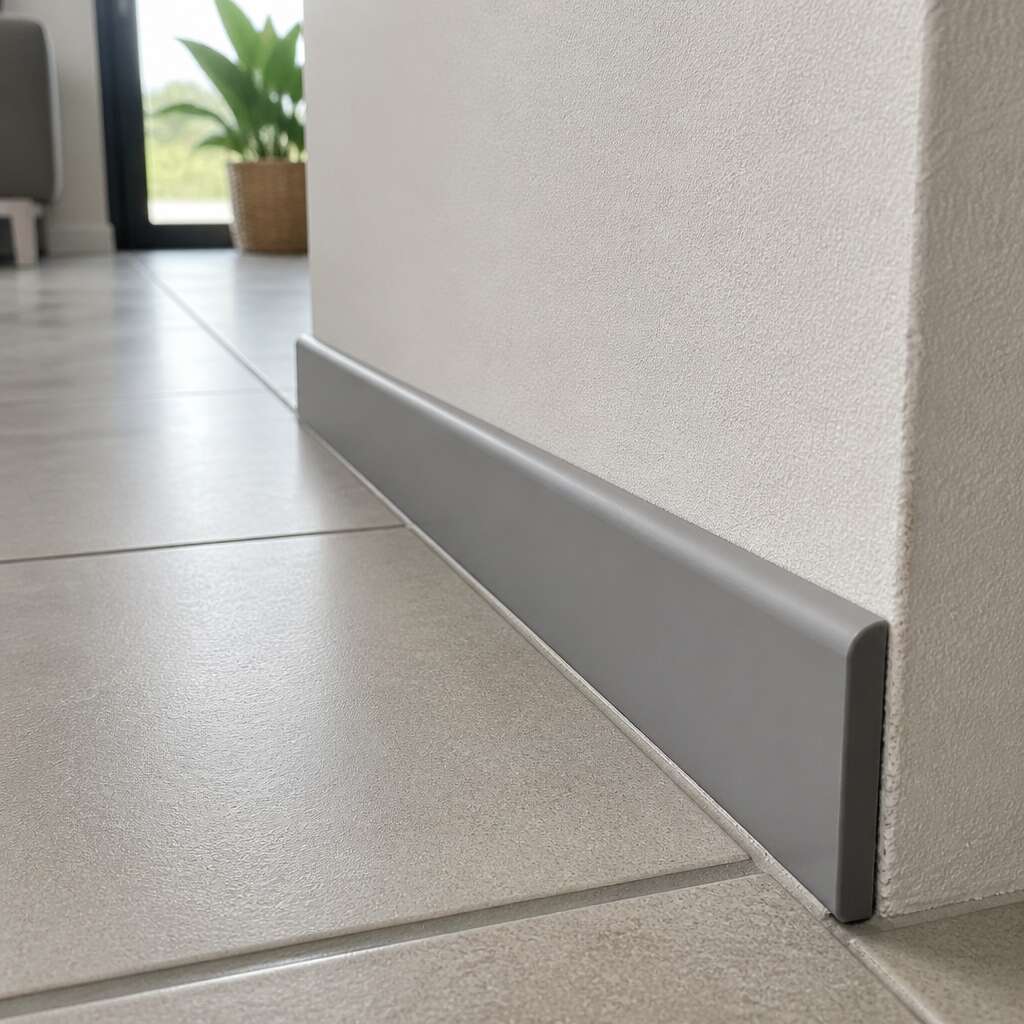
Understanding PVC Tile Edging
What Is PVC Tile Edging?
The transition from a bare concrete floor to a finished tile surface is where most installations fail aesthetically. That thin, vulnerable line where the tile terminates against another material is often the first place to show wear. This is precisely the problem that pvc tile edging south africa addresses for both residential and commercial spaces. It acts as a protective barrier and a visual frame, ensuring the perimeter of your tiled area remains sharp and secure.
At its core, this edging is a rigid profile designed to cover the raw, cut edge of a tile. It creates a clean junction between the flooring and adjacent surfaces like carpets, wooden floors, or exterior patios. More than just a cover, it absorbs impact and prevents the tile from chipping, which is a common occurrence in busy households or retail environments. The material itself is chosen for its resilience against moisture and its ability to withstand daily foot traffic without warping.
When selecting the right profile, the decision often comes down to the specific application environment.
– For high-traffic zones, a thicker, rounded profile offers superior impact resistance.
– In wet areas like bathrooms, a sealed profile prevents water from seeping under the tile.
– For a minimalist look, a low-profile strip sits almost flush with the tile surface.
The utility of these profiles lies in their adaptability, offering a simple solution to a complex installation issue every time.
How It Differs from Traditional Metal or Ceramic Edging
It is a common misconception that all edging profiles perform identically, but the material science tells a different story. Metal and ceramic trims have been the traditional choices for decades, prized for their perceived durability. However, they come with hidden complexities that can undermine an installation. Metal profiles, for instance, are rigid and unforgiving, which means they can struggle to cope with the natural thermal expansion of a subfloor. This rigidity can lead to the profile pulling away from the adhesive over time, creating a gap that collects dirt and moisture.
This is where the practical benefits of pvc tile edging south africa become particularly evident. The polymer composition offers a degree of flexibility, allowing it to absorb minor structural movements without cracking. This is crucial in environments with fluctuating temperatures or underfloor heating.
– Metal edging conducts heat and can become uncomfortably hot or cold to the touch.
– Ceramic profiles are brittle and can shatter if accidentally struck by heavy objects.
– PVC, by contrast, remains stable and safe, providing a consistent tactile experience.
Furthermore, the installation process itself is often more straightforward. Cutting a PVC profile to size requires minimal tools and does not risk chipping the way a ceramic trim might. For installers, this translates to cleaner edges and fewer callbacks. The material also does not oxidize or corrode, which is a specific advantage in coastal regions where salt air can degrade metal finishes rapidly. Ultimately, the choice comes down to prioritizing long-term resilience and ease of maintenance over traditional aesthetics.
Common Applications in South African Homes and Businesses
From the coastal humidity of Durban to the dry Highveld winters, the demand for resilient flooring solutions has surged. Consider that South Africa’s coastline stretches over 2,800 kilometers, a factor that constantly tests construction materials. The need for a trim that resists moisture and salt is not a luxury, it is a practical requirement. This is where pvc tile edging south africa finds its footing in daily life, offering a pragmatic response to unique environmental pressures.
In residential settings, the applications are straightforward yet varied. The focus is often on areas prone to spills and heavy foot traffic. For instance, the transition between ceramic tiles in a kitchen and vinyl flooring in a hallway demands a profile that handles slight height differences without creating a trip hazard. Homeowners use pvc tile edging south africa to protect the exposed edges of tiles on staircases, preventing unsightly chips and costly repairs.
Commercial properties contribute significantly to the adoption of this material. Restaurants require flooring that is hygienic and easy to sanitize. Shops benefit from edging that does not dent when trolleys roll over it. The ease of cleaning is a major factor, as there are no porous surfaces for bacteria to harbour. For installers, the ability to create a neat, continuous line in a busy retail environment without constant re-cutting is a genuine time saver.
We should also consider the aesthetic flexibility in local contexts. Whether matching a modern Johannesburg loft or a classic Cape Town cottage, the profiles offer a clean finish. I have seen contractors prefer it for its low maintenance appeal, particularly when clients want a seamless look without the cost of custom stone work. The material simply adapts to the layout, working with the floor rather than against it.
Material Properties and Durability in Local Climates
The UV index in Johannesburg can exceed 11 in summer, yet the polymer compounds in pvc tile edging south africa handle that exposure with minimal fading. Local profiles use plasticisers that retain flexibility even when the Highveld swings from frosty mornings to 30 degree afternoons. This thermal tolerance matters because flooring expands and contracts constantly in these conditions.
Salt air along the coast behaves differently. It attacks metal edging, but PVC does not corrode. The material also stays dimensionally stable in humidity without warping. I have seen cheap alternatives turn brittle within a year. Quality edging keeps its impact resistance.
- UV stabilisers prevent sun damage
- Flexible core absorbs movement
- Moisture resistance stops swelling
These properties make pvc tile edging south africa a practical companion for installers who need performance without constant callbacks.
Benefits of Choosing PVC Tile Edging in South Africa
Cost-Effectiveness Compared to Alternatives
When budgeting a renovation, the initial outlay often dictates the choices. pvc tile edging south africa offers a compelling economic argument that goes beyond the purchase price. Unlike aluminium or ceramic profiles, it eliminates the need for specialised cutting tools. A standard fine-tooth saw does the job. This reduces installation time significantly, which matters when you are paying a tradesperson by the hour.
Consider the lifecycle costs:
– PVC resists corrosion, so coastal properties avoid the replacement cycle common with metal edging
– The material flexes without cracking, reducing breakage during installation and transport
– Lightweight profiles lower shipping costs, particularly for bulk orders
The savings compound over time. For budget-conscious renovations, pvc tile edging south africa delivers cost-effectiveness without compromising on durability.
Resistance to Humidity and Moisture Damage
Coastal South African weather is unforgiving on many building materials. pvc tile edging south africa holds its ground. The extrusion is inherently non porous. Where ceramic profiles can develop hairline cracks and absorb standing water, or metal edging promotes galvanic corrosion in humid rooms, this PVC variant has no such weak points. The material simply does not wick moisture into the tile substrate. This matters more than you might expect when considering the lifespan of an installation.
Consider the places where moisture gathers:
– Shower and bath surrounds
– Kitchen worktops
– Outdoor entertainment areas
It is in these high humidity zones that the material’s resistance becomes a practical concern. Choosing pvc tile edging south africa for these environments prevents water from working its way under the tile edge. This protects the adhesive and substrate from long term deterioration. The result is a finish that stays firm and clean, rather than one that slowly loosens from within.
Flexibility and Ease of Installation
Ask any tiler in Cape Town or Johannesburg and they will tell you the same thing. The best edging is the one that goes in without a fight. pvc tile edging south africa wins on this front every time. The material has a natural spring to it. It bends around gentle curves in walls and follows the contour of a floor without needing specialist equipment.
The installation process is genuinely simple. You can score it with a standard utility knife and snap it cleanly at the corner. No angle grinder. No metal cutting discs. No filing down burrs that snag on cloths and skin. This means each joint sits flush, and the mitres close up tight without gaps that collect grime.
This ease of handling translates into real time savings on a project. For a DIY enthusiast, it is the difference between a weekend job and a month of frustration. For a professional contractor, it means fewer callbacks and less waste. The flexibility reduces the risk of damage during transit and on site, which is a significant factor in a country where distances between suppliers and job sites are vast.
For those planning their own renovations, the benefits are clear:
– No special tools required
– Cut precisely with a sharp blade
– Easily adjusted on site for small errors
– Lighter than metal, so it is easier to manage on ladders
The low weight is a hidden advantage. You can transport a full load of 2.5 metre lengths in a standard passenger vehicle. This is a practical concern that many people overlook when budgeting for materials.
Aesthetic Versatility for Modern Interiors
Modern South African interiors are leaning into bold tile choices, but the finishing edge often gets overlooked. PVC tile edging South Africa offers a palette that rivals any other trim. You can find profiles that mimic brushed steel, matte black, or even oak grain. The transition between wall and floor becomes a design element rather than an afterthought.
For a continuous look, choose a trim in the same tone as the grout. For contrast, select a dark profile against light porcelain. The slight sheen works well with matte and polished surfaces. Square profiles suit clean architectural lines. Rounded ones soften a space.
Popular choices for pvc tile edging south africa include:
- Matt white for minimalist bathrooms
- Brushed bronze for warm schemes
- Grey wood grain for organic looks
These options let the edging contribute to the composition. The visual impact is subtle but noticeable. That is exactly what contemporary South African design calls for.
Long-Term Performance with Low Maintenance
The South African coast is unforgiving. Salt-laden air, relentless sun, and sudden downpours take a toll on building materials. That is why long term performance matters more than initial appearance. Durability in this context means a material that resists the daily friction of bare feet, pets, and shifting furniture without showing wear.
PVC tile edging South Africa holds up without demanding attention. Unlike metal profiles that can corrode or wood trims that require sealing, this material keeps its structure with minimal effort. I have seen profiles in high traffic commercial spaces that still look sharp after years of use. The colour goes through the material, so surface scratches do not reveal a lighter core. Years later, it still looks the same as the day it was installed.
The maintenance routine is almost non existent. A damp cloth handles most marks. Harsh chemical cleaners are not needed, and the material does not react with standard household products. This matters for busy households.
- Resists oxidation and rust in coastal environments
- Does not require repainting or refinishing over time
- Retains shape and colour under prolonged UV exposure
- Withstands cleaning agents used in bathrooms and kitchens
What stands out is the freedom from seasonal upkeep. Traditional trims often demand periodic attention, whether it is a fresh coat of sealant or a touch up of paint. This edging simply continues working. For anyone weighing the true cost of a finish, the reduction in ongoing care is a decisive factor. The resilience stops problems before they start, which is precisely what a practical material should do. Homeowners save time, and businesses save on maintenance budgets. That quiet reliability is the real measure of value.
Types and Styles Available in the Local Market
Self-Adhesive vs. Screw-On Options
In a market where the finish of a renovation often hinges on the smallest details, the choice of edging profile can be the defining factor between a job that looks amateur and one that looks professionally installed. The local assortment extends from slim, low-profile strips designed for minimalist tiling to robust, heavy-duty trims meant for high-traffic commercial zones. When you start looking at the options, you will notice that the physical profile is the first major decision, whether you need a round-edged design for a soft look or a square edged cap for a sharp, architectural transition.
Aside from the visual silhouette, the surface finish plays a practical role in maintenance and safety. Many suppliers in South Africa now stock anti-slip edging with a textured surface, which is a smart choice for wet areas like pool surrounds or shower floors. You also have a choice between a smooth, polished finish for a sleek modern look, or a brushed finish that hides dirt and water spots more effectively. Here is a quick breakdown of the common profile choices you will encounter:
– Bullnose: Features a full rounded front, ideal for creating a softer transition on steps.
– Square/Rectangular: Provides a clean, linear edge that aligns perfectly with modern stone and rectified tiles.
– Wide Flange: Offers extra coverage on uneven cut edges or for walls that are slightly out of true.
When it comes to the actual mounting, most installers gravitate toward either self-adhesive or screw-on methods, and the distinction impacts more than just installation time. The self-adhesive varieties are usually backed with a strong, industrial grade tape. These are exceptionally fast to fit and eliminate the need to drill into the tile or substrate, which is a huge advantage for DIY enthusiasts. However, they demand a perfectly clean and dry surface during installation, otherwise the bond can weaken, especially in the warm, humid climates found along the KwaZulu-Natal coast.
On the flip side, screw-on options offer a mechanical fixation that remains secure on uneven surfaces like brick walls or around curved window sills. The screws, often supplied with caps for a seamless look, allow for a little bit of adjustment during the installation, which makes them forgiving for less experienced hands. The trade-off is the visibility of the screw heads, although the coloured caps do blend in well with the profile colour. For most high-traffic flooring applications, the screw-on method tends to be the choice for longevity, while self-adhesive types serve perfectly for backsplashes and vertical surfaces where stress on the joint is minimal. When sourcing your pvc tile edging south africa, it is common to see these two systems priced very closely, so the decision usually comes down to the substrate you are working with rather than the cost.
Color and Finish Variations (Greys, Woodlooks, White)
The first thing I notice with pvc tile edging south africa is the colour palette. The market has shifted toward greys, from pale ash to deep charcoal, because they anchor both cool and warm tile tones without stealing attention. White remains the default for subway tiles and light stone, but it is no longer stark. Many profiles now carry a soft matte sheen.
Woodlook finishes are the surprise favourite. They mimic oak, teak, and walnut, saving you from matching metal trims to timber-look floors. These are not foil wraps! The colour is fused into the PVC, so scratches do not expose a white core.
If you are browsing pvc tile edging south africa, a few themes repeat:
- Brushed grey finishes for water spots.
- Gloss white profiles for rectified porcelain.
- Textured woodlook trims for plank tiles.
That range keeps the edging invisible or makes it a deliberate feature.
Profiles for Straight or Curved Tile Transitions
Straight profiles dominate the market, but the real test comes when you hit a curved wall or a circular shower base. In pvc tile edging south africa, flexible PVC profiles bend gently around radii that rigid aluminium simply cannot follow. They arrive in two broad families:
- Rigid square-nose profiles for clean, uninterrupted runs.
- Flexible cove and rounded profiles that follow the substrate’s curve.
The distinction matters because a fixed profile forced into a bend will kink or crack. A proper flexible edging holds the arc and keeps the tile edge sealed. For large format porcelain, the straight profiles deliver crisp shadow lines. For feature walls or curved niches, the flexible range is the one you want. Both styles share the same colour-matching system, so you can switch between them without losing visual continuity. That flexibility is why pvc tile edging south africa keeps appearing in rooms where metal trims simply refuse to cooperate.
Heavy-Duty Options for High-Traffic Areas
Local suppliers stock a surprising range of PVC profiles, from slim 6mm strips to chunky 20mm systems. The heavy-duty variants carry the real structural weight. These thicker sections use reinforced polymer blends that resist denting when trolleys roll over them or when a heavy pot lands on a kitchen floor.
In high-traffic spaces like hotel lobbies and clinic corridors, standard trims wear quickly. Heavy-duty options solve that:
– Reinforced corner profiles for external 90-degree angles
– Extra-wide base plates for uneven screeds
– Impact-resistant polymer with UV stabilisers
The pvc tile edging south africa market has shifted toward these robust styles for commercial fit-outs. A 20mm profile on a warehouse floor handles forklift traffic far better than a thin domestic strip. Suppliers across the pvc tile edging south africa market now stock heavy-duty versions as standard, and colour options stay consistent across the range. A heavy-duty transition can match a delicate wall trim without looking mismatched.
Eco-Friendly or Recycled PVC Selections
South African manufacturers now blend post-industrial regrind and post-consumer recycled polymer into their edge profiles. These recycled PVC compounds match virgin material in impact resistance, yet they divert plastic waste from landfills. That is a meaningful step, given the scale of plastic waste this country produces.
The pvc tile edging south africa market has responded with genuinely useful eco ranges. Several suppliers carry certified recycled content labels, and a few run closed-loop take-back schemes where installation offcuts return to the factory. I have seen these schemes work well on large commercial jobs, and the waste disposal savings alone justify the switch.
- Recycled cap strips with co-extruded wear layers
- Profiles containing 30 to 70 percent post-consumer polymer
- Colour-matched recycled trims for mixed material transitions
Dimensional stability and UV resistance stay identical to conventional lines, so there is no visual or structural compromise. Sustainability without the usual trade-offs!
Installation Tips and Best Practices
Preparing Tile Edges for Adhesive or Mechanical Fixing
Professionals in the tiling trade report that roughly seventy percent of edging failures stem from inadequate surface preparation, not material defects. This often surprises South African DIY enthusiasts, yet it remains the primary reason for callbacks. A clean, stable substrate is non-negotiable before any pvc tile edging south africa project takes shape. Residual adhesive, dust, or grease will undermine even the most robust mechanical fixings, leading to unsightly movement over time. You should always vacuum the floor and wipe down the tile edges with a solvent-based cleaner, allowing it to dry completely.
Securing the edging to the tile face demands a rational sequence. For adhesive applications, apply a continuous bead of neutral-cure silicone or a strong hybrid polymer. This prevents hollow spots behind the trim. Consider the following preparatory steps to ensure a durable bond:
1. Cut the edging profile to length with a fine-tooth saw to avoid burrs.
2. Roughen the back flange of the profile with fine grit sandpaper.
3. Apply primer to the tile substrate if it is glazed or non-porous.
4. Position the profile immediately, before the adhesive skins over.
For mechanical fixing, the placement of screws or nails is equally deliberate. You must pre-drill pilot holes through the PVC flange to prevent cracking, especially in cooler temperatures. The expansion coefficient of PVC differs from tile, so you need to leave a small gap at the end caps for thermal movement. This prevents buckling when the ambient temperature shifts. Choosing between these methods depends largely on the local climate; coastal regions with high humidity often favour the flexibility of adhesive systems, whereas inland areas see better results with mechanical fixtures. Just remember to align the profile edge with the finished tile surface before the adhesive sets.
Step-by-Step Fitting Process for DIY Enthusiasts
Fitting pvc tile edging south africa follows a logic that many DIY enthusiasts overlook. I have seen too many projects fail because someone skipped the measuring stage. Measure every run before cutting anything, since this reveals where joints will fall and how to hide them.
The sequence matters more than speed:
- Cut profiles with a fine-tooth saw, then deburr the edges.
- Dry-fit each piece along the tile edge to confirm alignment.
- Apply adhesive in a zigzag pattern along the channel, not the flange.
- Press the profile home with a firm, even motion and wipe away excess before it cures.
Work in short sections, never the full length, to maintain control. For curved transitions, notch the back flange at regular intervals to allow bending. This prevents kinking and keeps the profile flush, a detail that separates decent pvc tile edging south africa work from sloppy fit-outs.
Common Mistakes to Avoid During Installation
Even careful DIYers make avoidable errors when fitting pvc tile edging south africa. One recurring mistake is applying adhesive to a dusty or greasy substrate. The bond fails silently, then the profile lifts weeks later. Another is forcing rigid profiles around tight corners without notching. This creates stress fractures that ruin the finish.
Check the tile edge for lippage before you begin. If tiles sit unevenly, the edging will exaggerate the problem. Also, avoid mixing screw-on and adhesive profiles in the same run. They behave differently under thermal movement.
A few things to keep in mind:
- Clean the channel thoroughly before pressing the profile home.
- Use a spirit level across long runs, not just your eye.
- Trim the profile slightly short of the wall to allow for expansion.
This is where most pvc tile edging south africa installations go wrong, and it is entirely preventable.
Tools and Materials Required for a Professional Finish
Sharp blades and steady hands separate a clean fit from a botched one. For pvc tile edging south africa, the tools you choose dictate how well the profile sits against the tile. I prefer a scoring knife with replaceable blades, not a tired utility knife that tears the PVC.
Adhesive selection matters more than most DIYers think. A hybrid polymer bond handles thermal shifts in coastal humidity. For screw-on profiles, pair them with brass screws and plastic anchors to prevent galvanic corrosion.
- Mitre box with a 45 degree guide
- Rubber mallet for gentle seating
- Damp cloth for immediate cleanup
Dry-fit each section before committing to adhesive. Mark the back of the profile with a pencil for reference. This habit saves you from misaligned joints. Invest in a spirit level that reads true across long runs, because pvc tile edging south africa shows every wobble.
Where to Source PVC Tile Edging in South Africa
Leading Hardware and Building Material Retailers
South African homeowners spend millions annually on tile finishes, yet the edging profile often gets overlooked until the final hour. Builders Warehouse and CTM carry stock in most provinces, while Tile Africa offers a focused selection for ceramic and porcelain installations. Online marketplaces such as BuildIT and specialist flooring importers ship nationally, which helps when your local branch lacks a particular colourway.
When sourcing pvc tile edging south africa, weigh these channels:
– Builders Warehouse for immediate availability and bulk pricing
– CTM for mid-range profiles and clearance deals
– Tile Africa for ceramic-specific ranges
– Independent tile shops for premium European brands
Independent hardware stores in Johannesburg, Durban, and Cape Town often undercut the chains. They buy in volume and pass savings on to trade buyers, especially for self-adhesive strips.
Online Suppliers with Nationwide Delivery
Shipping logistics often determine whether a renovation stalls or finishes on schedule. For pvc tile edging south africa, online suppliers have closed the gap between coastal metros and smaller towns. Specialist e-commerce stores stock profiles that hardware chains rarely carry, including woodlook finishes and flexible cove strips.
Ordering direct from importers removes the retail markup, which matters when you need fifty metres of a single colour. I have seen trade buyers save nearly a third on bulk orders this way. Most platforms offer free delivery over R1,500, lead times of two to five working days, and cut-to-length options for curved transitions.
The real advantage is stock depth. A local branch might carry three greys; an online warehouse can hold twenty. That range matters when matching existing floors or specifying for a multi-unit project. Just confirm the delivery fee before checkout, as rural routes sometimes carry surcharges. Online sourcing for pvc tile edging south africa remains the most reliable path for consistent supply.
Specialist Tiling Stores and Showrooms
A physical showroom changes the buying experience entirely. Seeing pvc tile edging south africa products in person reveals subtle differences in sheen and profile depth that photos hide. Specialist tiling stores let you hold a length of edging against your actual tile sample, which resolves uncertainty before you spend a cent.
Staff at these stores often have tiling backgrounds, so they can flag compatibility issues with underfloor heating or movement joints. Many showrooms keep a broader palette than general hardware outlets, including imported woodlooks and cove strips.
When visiting, bring a tile offcut and your floor preparation details. Compare how each profile flexes around curves, and check the lip height against the tile thickness. Showrooms also sell fixing accessories designed to work with specific systems, saving you a second trip.
Pricing Expectations Across Different Regions
Once you have settled on a profile in person, the next decision is where to buy. Online suppliers with nationwide delivery have changed how contractors source pvc tile edging south africa. Their warehouse pricing often undercuts physical retailers by 10% to 15%, but freight charges can erase that advantage on single rolls. Always compare the total landed cost.
Regional pricing for pvc tile edging south africa follows a predictable pattern. Gauteng buyers pay the least thanks to dense supplier competition. The Western Cape and KwaZulu-Natal carry modest premiums. Remote towns in the Northern Cape can face markups near 30% once courier fees and minimum order thresholds apply.
1. Bulk purchases above 50 metres unlock wholesale rates.
2. Heavy-duty profiles cost more than standard lipping.
3. Locally extruded PVC is cheaper than imported European brands.
Warranty and After-Sales Support Considerations
With the regional pricing picture in mind, the next step is selecting a supplier who stands behind their product. Warranties on pvc tile edging south africa are not universal, so scrutinising the fine print before payment is essential. Most local extruders offer a 10 year guarantee against fading or brittleness, but imported brands sometimes carry shorter terms. Ask pointed questions about what the warranty actually covers, as installation errors void many claims.
A robust after-sales process matters just as much as the length of the cover. Online warehouses often provide the best rates, yet their support structure can be thin. If an order arrives with damaged profiles or the wrong colour, you need a clear path to resolution. Confirm the supplier’s return policy and whether they hold replacement stock in Cape Town, Johannesburg, or Durban, since shipping delays stall projects.
When comparing vendors, look for these specifics:
1. Does the warranty require proof of purchase from an approved retailer?
2. Are colour fade claims subject to laboratory testing or visual inspection?
3. Who bears the freight cost for returning defective goods?
Physical showrooms offer the advantage of face-to-face negotiation and immediate product exchange. Specialists can also advise on whether a standard profile suffices or a heavy duty option is warranted for commercial spaces. Whichever channel you choose, request a written confirmation of the warranty term and the replacement process, as verbal promises rarely survive a dispute.
Maintenance and Longevity of PVC Tile Edging
Cleaning Methods That Preserve Appearance
PVC edging saves hours of scrubbing compared to grout lines, which is a significant advantage for busy households. The material itself resists staining, but the joints where sections meet require periodic attention to maintain a uniform look.
A simple routine of wiping with a damp cloth handles most daily residue. For tougher marks, a mild detergent solution works well. Avoid abrasive pads or chemical strippers, as these can dull the surface sheen and create microscratches that trap dirt.
– Use a soft sponge with warm soapy water for weekly cleaning.
– Apply a specialist plastic cleaner for stubborn scuffs or adhesive residue.
– Buff dry with a microfibre cloth to prevent water spots.
South African water hardness can leave mineral deposits on edging in coastal regions like Durban. White vinegar diluted with water breaks down these deposits effectively, but always rinse thoroughly afterward. UV exposure from high-altitude sunlight can cause slight colour fading over a decade, so periodic inspection of exposed areas is wise.
The structural integrity of pvc tile edging south africa offers remarkable resilience to impact and thermal movement. Unlike metal profiles that can bend or ceramic options that chip, the polymer flexes without cracking. This longevity means the edging maintains its protective function and clean lines for many years, provided the initial installation used quality adhesive suitable for local temperature fluctuations.
Protecting Edging from Scratches and Impact
A trolley wheel scraping against a tile edge can destroy metal profiles in one pass. The polymer used in pvc tile edging south africa flexes and springs back, leaving only a faint mark that buffs out with a cloth.
Daily collisions from vacuum cleaners, pet bowls, or moving furniture are absorbed by the material’s cellular structure. The main risk window sits during installation, when adhesive is still curing. A misaligned tile edge can press against the profile and create permanent distortion.
– Keep the profile covered with masking tape until adhesive fully cures.
– Use floor protectors under furniture legs that rest near edging.
– Check for lifting at joints after seasonal temperature shifts.
Commercial spaces in Johannesburg and Cape Town benefit from this abrasion resistance, which outperforms aluminium profiles in real-world wear tests.
Repair or Replacement When Damage Occurs
In the tiling trade, repair is often overlooked in favour of ripping out the whole profile, yet the polymer’s molecular memory allows it to bounce back from most dents. A quick heat gun pass and a flat block can often resurrect a crushed section of pvc tile edging south africa without removing the adhesive base.
When damage goes beyond surface compression, look for specific structural cues. The profile becomes useless if it has snapped at a corner joint, if the lip has torn away from the substrate, or if repeated impact has caused the PVC to craze into a white, brittle line. In those cases, replacement is the only sane route. Removing a damaged strip requires cutting the old adhesive with a thin-bladed knife, then scraping the substrate clean before fitting a fresh length.
Replacement profiles in South Africa are sold in 2.5 metre sticks, so matching a damaged section often means buying a full length anyway. Keep offcuts from the original installation; they make perfect donor material for short patch repairs, which extends the longevity of the whole floor edge system far beyond the warranty period.
Signs That Your Edging Needs Attention
Most homeowners only inspect their floor transitions after a scuff mark becomes impossible to ignore. By then, the damage has often migrated beyond the surface. The good news is that PVC tile edging south africa withstands an incredible amount of abuse before giving up, but knowing when to intervene matters. A strip of edging that has lost its grip in one corner can allow water to creep underneath the tile base, which leads to swelling in wooden subfloors and discolouration in grout lines.
Visible wear takes many forms. I have seen edging in Cape Town homes that looked ruined at first glance, yet a simple wipe with mineral spirits revealed the surface was only stained. Staining rarely affects structural integrity. However, watch for these signals:
- Hairline fractures running perpendicular to the tile edge, indicating stress from thermal movement.
- A dull, chalky film that persists after cleaning, which suggests polymer degradation from sustained UV exposure.
- Clicking sounds when you walk across the transition, a sign the adhesive bond has separated from the substrate.
Colour fading deserves consideration as a longevity marker. Dark grey profiles installed near north-facing windows in Johannesburg tend to lighten over time, but this cosmetic shift does little to compromise performance. Compare the faded area against the rest of the strip. If the degradation looks blotchy rather than uniform, the PVC compound may have contained a faulty pigment batch, which could mean the material becomes brittle sooner than expected.
Older installations reveal another pattern. The lip that holds the tile in place can curl upward after years of foot traffic, particularly in widths narrower than 10 millimetres. This curl creates a trip hazard and allows debris to collect beneath the tile edge. Use a straightedge to test the profile’s flatness every few months. A gap of more than one millimetre indicates the internal plasticiser has migrated, and the profile is finished.
One recurring failure point appears consistently across South African installations: the corner joint. Because PVC expands slightly with heat, mitred corners worked during cold months can push apart when summer arrives. This movement usually settles, but a corner that remains gapped by two millimetres or more will collect dirt and moisture. That gap becomes a breeding ground for mould that travels behind the visible profile and attacks the adhesive.
Lifespan Expectations Under Typical South African Conditions
PVC tile edging south africa typically outlives the flooring it borders. I have pulled twenty year old profiles from Durban homes that still flexed without cracking. The plasticiser blends used in modern compounds hold up far better than those early batches.
Maintenance stays simple. Sweeping grit away from the transition points matters, because abrasive sand grinds down the surface finish over time. Coastal properties need a wipe down more often, as salt crystals can etch the profile’s sheen.
Under normal conditions, these lifespans are realistic:
- Indoor residential transitions: 15 to 25 years
- Shaded commercial spaces: 10 to 15 years
- Direct sunlight or coastal exposure: 5 to 10 years
Heat accelerates polymer ageing, so a profile near a north facing window in Pretoria will degrade faster than one in a cool passage. That is not a defect. It is simply the material responding to its environment.



0 Comments